

A heat pump installation diagram serves as a visual blueprint, illustrating the configuration and connections of a heat pump system. These diagrams are essential for both professionals and homeowners to comprehend the setup, ensuring efficient operation and maintenance. Complementing this, a heat pump schematic diagram delves deeper, showcasing the internal components and their interrelations, providing a comprehensive view of the system's functionality.

What Information Does a Heat Pump Installation Diagram Include?
A comprehensive heat pump installation diagram typically includes:
Indoor Unit Placement: Ideal location within the living space, including wall clearances and mounting heights.
Outdoor Unit Location: Recommendations for distance from structures, airflow clearance, and protection from elements.
Refrigerant Line Paths: Clear indication of how copper lines should be routed between indoor and outdoor units.
Electrical Connections: Wiring schemes for thermostats, power supply, control boards, and safety disconnects.
Drainage System: Proper routing of condensate drain lines to prevent water damage or mold growth.
Airflow Direction: Ductwork or vent directions, especially for central heat pump systems, to optimize air circulation.

Key Components Illustrated in Heat Pump Diagrams
Both installation and schematic diagrams highlight crucial elements of a heat pump system:
Compressor: Acts as the heart of the system, circulating refrigerant and facilitating heat transfer.
Condenser Coil: Releases absorbed heat to the desired space or medium.
Evaporator Coil: Absorbs heat from the source, initiating the heat transfer process.
Expansion Valve: Regulates refrigerant flow, ensuring optimal pressure and temperature.
Reversing Valve: Enables the system to switch between heating and cooling modes.
Air Handler: Distributes conditioned air throughout the building.
Refrigerant Lines: Connect indoor and outdoor units, allowing refrigerant circulation.
Understanding these components is vital for interpreting both installation and schematic diagrams, ensuring proper setup and operation.
Interpreting Heat Pump Schematic Diagrams
A heat pump schematic diagram provides a detailed representation of the system's internal workings. It illustrates the flow of refrigerant through various components, highlighting the thermodynamic cycle:
Evaporation: Refrigerant absorbs heat from the source, transitioning from liquid to gas.
Compression: The compressor increases the pressure and temperature of the gaseous refrigerant.
Condensation: Refrigerant releases heat to the target area, reverting to liquid form.
Expansion: The expansion valve reduces the refrigerant's pressure, cooling it before re-entering the evaporator.
This cycle is continuous, allowing the heat pump to efficiently transfer heat.
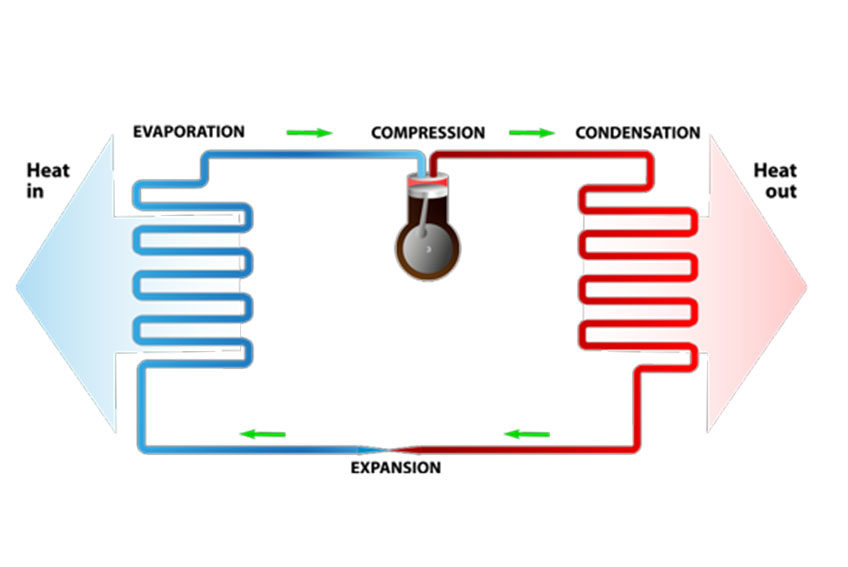
This diagram shows how a heat pump works.
Practical Applications of Heat Pump Diagrams
For homeowners and technicians, these diagrams are invaluable tools:
Installation: Guides proper placement and connection of components.
Troubleshooting: Helps identify and rectify system issues.
Maintenance: Assists in routine checks and servicing.
By familiarizing oneself with both installation and schematic diagrams, one can ensure the heat pump operates at peak efficiency.
Heat Pump Installation Diagram FAQ
1. What is a heat pump installation diagram used for?
A heat pump installation diagram visually maps out how the components of a heat pump system should be positioned and connected during setup. It ensures correct installation, especially for DIY users or HVAC professionals performing system integration or retrofits.
2. How does a heat pump schematic diagram differ from an installation diagram?
While an installation diagram shows physical placement and wiring connections, a heat pump schematic diagram illustrates the internal flow of refrigerant, electrical paths, and operational logic. It's more focused on how the system works rather than how it's assembled.
3. Do I need a schematic diagram to maintain my heat pump?
Yes. A heat pump schematic diagram is extremely helpful during routine maintenance or when diagnosing issues. It allows technicians to trace circuits, identify faulty components, and understand how each part affects system performance.
4. Can I install a heat pump by just following a diagram?
Not entirely. While a heat pump installation diagram provides crucial guidance, successful installation also requires knowledge of electrical safety, local codes, refrigerant handling, and HVAC best practices. It's recommended to consult or hire a certified technician.
5. Are there different types of diagrams for different heat pump systems?
Absolutely. Diagrams vary depending on the type of heat pump - air-source, ground-source, ductless mini-splits, etc. Each system has unique components and configurations that require tailored heat pump schematic diagrams and installation layouts.
Professional vs. DIY Installation
While a heat pump installation diagram is incredibly helpful for DIY users, some parts-like refrigerant charging or high-voltage wiring-should only be handled by certified HVAC professionals. Always consult your local codes and manufacturer guidelines before proceeding. If you have any queries about heat pumps, please contact us directly by email: info@powerworldhp.com. Stay tuned!