

How Modern Industrial Cooling Systems Improve Productivity, Reduce Energy Costs, and Support Sustainable Manufacturing
Keeping a large industrial workshop cool has become one of the biggest operational challenges facing today's plant managers.
Modern manufacturing facilities generate enormous amounts of heat from production equipment, welding lines, machining centers, injection molding machines, and automated production systems. At the same time, many factories feature high ceilings, open layouts, and frequent loading operations that make temperature control far more difficult than in commercial buildings.
Traditional air conditioning systems often struggle in these environments. They consume large amounts of electricity, provide uneven airflow, and require costly installation and maintenance. The result is excessive energy bills, overheating equipment, reduced worker comfort, and lower production efficiency.
As manufacturers continue pursuing lower operating costs and higher energy efficiency, investing in the right industrial cooling system is no longer just a maintenance decision-it's a strategic investment in long-term competitiveness.

Why Conventional Factory Air Conditioning Often Falls Short
Unlike offices or retail buildings, industrial facilities place unique demands on cooling equipment.
Common challenges include:
- Large open production areas
- Ceilings exceeding 8 meters
- Continuous heat generation from machinery
- Poor building insulation
- Frequent opening of loading doors
- Dust and harsh industrial environments
- Traditional fixed-frequency air conditioners were never designed for these operating conditions.
As a result, many factories experience:
- Uneven cooling
- Hot and cold zones
- High electricity consumption
- Frequent equipment failures
- Rising maintenance costs
For plant managers, these issues directly impact operating expenses and employee productivity.
What Makes an Industrial Cooling System Different?
An effective industrial air conditioner is designed specifically for demanding manufacturing environments.
Compared with conventional commercial air conditioning, industrial cooling solutions prioritize:
- High-volume airflow
- Long-distance air delivery
- Stable continuous operation
- Lower energy consumption
- Simplified installation
- Reduced maintenance
Rather than simply lowering room temperature, the objective is to create a stable working environment that protects both people and production equipment.
Power World's Third-Generation Industrial Energy-Saving Air Conditioner
With more than 22 years of engineering experience and a 200,000㎡ manufacturing base, Power World has developed a third-generation industrial energy-saving air conditioner designed specifically for large-scale manufacturing facilities.
The system combines advanced cooling technologies to deliver efficient, reliable performance while significantly reducing operating costs.
Hybrid Cooling Technology for Maximum Efficiency
Unlike conventional systems that rely solely on compressor-based refrigeration, Power World's solution integrates:
- Water cooling
- Air cooling
- High-efficiency compressor technology
- into one intelligent cooling cycle.
How It Works
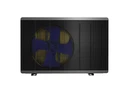
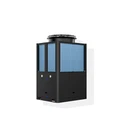
The outdoor unit uses an evaporative wet-curtain condenser to cool circulating water.
This chilled water absorbs heat from the refrigerant within the indoor unit.
The refrigerant then transforms into low-temperature gas, producing a powerful stream of cool air for the workshop.
Meanwhile, the warmed circulating water returns outdoors to be cooled again, creating a continuous closed-loop system that maximizes cooling efficiency while minimizing energy consumption.
This hybrid architecture enables excellent performance even in demanding industrial environments.
Performance Designed for Large Manufacturing Workshops
Rapid Cooling
Power World's industrial cooling system can reduce indoor temperatures by 6–10°C within just 30 minutes.
Its high-power air delivery system provides an effective airflow distance of 10–15 meters, quickly improving comfort across large production areas.
Wide-Area Air Distribution
Large factories require more than simple cooling-they require consistent cooling.
The system features:
Multi-directional airflow
Multiple air outlets
Optimized air distribution design
making it ideal for workshops with ceilings above 8 meters while minimizing temperature differences and eliminating cooling blind spots.
Fast Installation Without Interrupting Production
One of the biggest concerns for factory managers is production downtime.
Power World's solution is designed for rapid deployment.
Installation requires:
- No ceiling demolition
- No wall reconstruction
- No heavy lifting equipment
Most projects can be installed, commissioned, and placed into operation within the same day, allowing production to continue with minimal interruption.
Significant Energy Savings and Lower Total Cost of Ownership
Energy efficiency remains one of the most important considerations when selecting an industrial cooling solution.
Compared with traditional fixed-frequency air conditioners, Power World's third-generation system delivers 40–70% energy savings.
For example:
A manufacturing workshop requiring 13 conventional air conditioners with a combined power consumption of 52 kW can achieve the same cooling performance using only 5 Power World units, consuming approximately 20 kW.
This reduces electricity consumption by more than half while also lowering initial equipment investment.
In many applications, customers recover their investment within 1.5 to 2 years through electricity savings alone.

Flexible Configurations for Different Factory Layouts
Every manufacturing facility has unique airflow and installation requirements.
Power World offers multiple indoor unit configurations, including:
- Floor-standing louvre units
- Wall-mounted louvre units
- Long-distance nozzle units
- Ducted systems
- Hanging square outlet models
This flexibility allows engineers to optimize airflow based on workshop size, ceiling height, equipment layout, and production processes.
Air Quality Solutions for Specialized Industries
Some industrial environments require more than cooling.
For electronics, food processing, pharmaceutical, and precision manufacturing applications, optional purification models provide:
- Dehumidification
- Air sterilization
- Odor removal
- Air purification
These functions help create cleaner, healthier production environments while improving product quality.
Why Manufacturers Choose Power World
Power World is more than an equipment supplier-we are a long-term manufacturing partner.
Our Advantages
Established in 2004
More than 22 years of HVAC innovation
200,000㎡ intelligent manufacturing base
Annual production capacity exceeding 2 million units
Export experience in over 60 countries
OEM & ODM manufacturing services
Professional engineering and technical support
Our industrial cooling solutions are widely used in:
Manufacturing plants
Warehouses
Automotive facilities
Electronics factories
Textile workshops
Logistics centers
Food processing plants
Industrial Cooling Is an Investment in Productivity
Factory cooling should never be viewed simply as an operating expense.
A properly designed industrial cooling system helps businesses:
- Improve employee comfort
- Increase production efficiency
- Protect valuable machinery
- Reduce equipment downtime
- Lower electricity costs
- Support sustainability goals
As manufacturing continues moving toward smarter and greener operations, energy-efficient cooling systems will play an increasingly important role in maintaining competitiveness.
Modern factories demand more than traditional air conditioning can provide.
Power World's third-generation industrial energy-saving air conditioner combines hybrid cooling technology, rapid installation, wide-area airflow, and exceptional energy efficiency to meet the unique challenges of industrial environments.
Whether you're upgrading an existing facility or planning a new manufacturing plant, choosing the right industrial cooling architecture can deliver measurable returns in productivity, operating costs, and long-term sustainability.