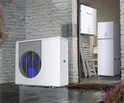


For OEM/ODM businesses looking to source high-quality heat pumps, the process often feels overwhelming. What are the key performance parameters? Which manufacturer can balance cost, innovation, reliability, and certifications? How do you avoid problems like delayed delivery, low lifespan, or hidden costs?
If you're evaluating heat pump manufacturers-especially those dealing in air source heating and heating water heater systems-this guide will lay out everything you need: from technical criteria and decision steps, to comparing manufacturers, spotting pitfalls, and making confident supplier choices.

What Is a Heat Pump Manufacturer & Key Concepts
To make the right decisions, you need to understand several core terms. These will recur in your conversations with suppliers, in spec sheets, and in validating quality.
| Term | Definition | Why It Matters for B2B / OEM |
|---|---|---|
| COP / SCOP / HSPF | Coefficient of Performance, Seasonal COP / Heating Seasonal Performance Factor. Measures efficiency under operating conditions. | Determines operating cost, green certifications, customer appeal. |
| EVI / Inverter / Full-DC | Enhanced Vapor Injection; inverter compressors that vary speed; full DC (direct current) drive | Better part-load performance, quieter, more efficient, especially in colder climates. |
| Operating Temp Range | The lowest and highest ambient/working temperatures at which the heat pump still meets performance specs | Crucial if selling into cold-climate regions or where hot water heater demand is high (e.g. for industrial use or hotels). |
| Refrigerant Type (e.g. R290, R32) | Chemical used to carry heat in the system | Affects environmental impact (GHG, ODP), regulatory compliance, safety, cost. |
| Heat Pump Water Heater vs. Heating + Cooling Air Source Systems | Water heaters are designed to heat domestic or industrial hot water; air source heating systems heat/cool air (or act as part of HVAC) | The design requirements differ (tank, insulation, controls) so manufacturer experience matters. |

Step-by-Step Guide / Evaluation Criteria for Choosing a Manufacturer
Here are logical steps / criteria you should use when assessing potential Power World heat pump manufacturers or similar.
Step 1: Define Your Application & Market Requirements
1.1 Use Case & Climate Zone
Residential vs. commercial vs. industrial
Indoor space heating & cooling vs. water heating vs. pool heating
Ambient temperature extremes (winter lows, summer highs)
1.2 Regulatory & Certification Standards
Local certifications (e.g. CE, UL, ETL, AHRI, REACH)
Refrigerant regulations (EU F-gas, US EPA rules, etc.)
Efficiency / Carbon emissions mandates
1.3 Capacity & Size Constraints
Thermal output (kW), flow rates, water tank capacity
Physical size, weight, mounting constraints
Noise limits, power supply (voltage, phase)
1.4 Budget, Lead Time, and Supply Chain
Unit cost vs. lifetime cost
MOQ (minimum order quantity) for OEM/ODM
Lead time, spare parts availability, logistics

Step 2: Technical Performance & Quality
2.1 Efficiency & Performance Metrics
Peak COP, part-load COP (important for air source heating in cold days)
Maximum hot water temperature for water heaters
Heat pump's capacity at low ambient (e.g. --15 °C or lower)
2.2 Components Quality
Compressor brand (scroll, inverter, etc.)
Heat exchanger type and material (copper, stainless steel, titanium for pool)
Control electronics, sensors
2.3 Manufacturing Capabilities & R&D
Does the manufacturer have in-house R&D / labs / engineers?
Ability to design custom configurations (ODM) or accept your designs (OEM)
Demonstrated history (years in business, projects delivered)

Step 3: Supplier Comparison & Value Proposition
Here you compare different manufacturers based on criteria; below are what to look for.
3.1 Cost vs. Total Cost of Ownership (TCO)
Initial production cost per unit
Operating energy cost (in real climate conditions)
Maintenance, parts replacement
3.2 Customization & Branding
OEM/ODM flexibility (branding, aesthetics, control software)
Ability to adapt spec for different markets (e.g. cold climates, pool applications)
3.3 After-Sales Support & Warranty
Duration & coverage of warranty
Spare parts supply chain, technical support
Training & documentation
3.4 Certifications / Test Reports & References
Independent performance tests, durability, safety reports
Client references, track record (especially similar projects)

Product Examples & Manufacturer Comparison
Below are example comparisons (these are illustrative; get precise data from manufacturers) to show how different types of offerings stack up.
| Product Type | Manufacturer A (e.g. Power World) | Manufacturer B (European OEM) | Manufacturer C (Niche Cold-Climate OEM) |
|---|---|---|---|
| Air Source Heating – Residential | Full-DC inverter, COP in cold, uses R32/R290, strong OEM/ODM capacity, good warranty | High build quality, maybe higher cost, lean towards more conservative refrigerants, excellent certification | Designed specifically for extreme cold, better low-ambient performance but higher cost and weight |
| Heat Pump Water Heater | Integrated tank options, hot water up to ~60-70 °C, cost benefit by bundling with other products, OEM/ODM flexibility | European brands may offer very high efficiency (upper part of standards), premium finish, better documentation | Good for industrial/hotel use, higher temperature, larger tanks, possibly hybrid systems |
| Pool Heating Systems | Use of titanium exchangers, R290/R32 small footprint, inverter control, quieter units | More robust casing, weather protection, serviceability | Cold climate or high flow rate specialized, possibly more expensive but built for harsh conditions |
Common Pitfalls & Misconceptions (Avoid These Traps)
When working with heat pump manufacturers, especially in OEM/ODM, there are pitfalls that frequently lead to disappointment. Knowing these in advance lets you ask the right questions.
Overrated Efficiency Claims: Some specs are quoted under ideal lab conditions, not in your local climate. Ask for performance at expected low ambient temperatures.
Ignoring Refrigerant Regulations: A "cheap" unit using a disallowed or soon-to-be phased-out refrigerant can sink you with regulatory issues or forced redesigns.
Neglecting Low Ambient / High Temperature Output: Units may perform poorly in extreme cold or may fail to achieve desired hot water temperatures, reducing system lifespan or causing poor user satisfaction.
Underestimating Noise, Vibration, and Serviceability: Especially in residential settings or hotel/public space use, noise and vibration matter. Access to spare parts and ease of maintenance matter even more.
Poor After-Sales & Documentation: Warranty terms that are vague, no tech support, no spare parts, no local representation = risk.
MOQ & Hidden Costs: Small orders may carry high per-unit costs. Tooling, custom molds, firmware localization, testing costs may be extra.

Why Power World (Case Study of a Strong Manufacturer)
Founded 2004; strong in R&D, manufacturing, marketing, customer service.
Products span air source heat pumps, swimming pool heat pumps, heat pump water heaters, high temperature hot water solutions.
Offers OEM/ODM; diverse refrigerants (R290, R32) and full inverter / EVI tech.
Large output capability, many production lines, experienced engineers, lab capacity.
product range, technical ability, refrigerant policies, certifications, and support.