

What's a Heat Pump?
A heat pump is a highly efficient device that can heat or cool your home by moving heat-not generating it. Instead of burning fuel, a heat pump uses electricity to transfer heat from one place to another. This makes it cleaner, more efficient, and more environmentally friendly than traditional heating systems.
In this article, we'll explain how does heat pump work in clear, simple language. We'll also cover what do heat pumps look like and provide an easy overview of air to air source heat pumps.

How Does a Heat Pump Work?
At its core, a heat pump works using the same basic principle as a refrigerator-just in reverse. Think of your heat pump as a "two-way fridge" that can move heat either into your home (for heating) or out of your home (for cooling).
1. The Basic Components
A standard heat pump system includes:
Evaporator (absorbs heat)
Compressor (increases refrigerant pressure & temperature)
Condenser (releases heat)
Expansion valve (controls refrigerant flow)
These components circulate a special fluid called refrigerant through a continuous loop.
2. The Refrigerant Cycle - How Heating Works
Here's how the cycle works in heating mode:
Absorbing heat from outside
Even cold outdoor air contains usable heat. The refrigerant in the evaporator absorbs this heat and turns into a gas.
Compressing the refrigerant
The compressor squeezes the gas, making it much hotter-just like how pumping air into a tire heats up the pump.
Releasing heat indoors
The hot refrigerant gas flows to the condenser, where it releases heat into your home's indoor air or water system.
Cooling & repeating the cycle
The refrigerant returns to liquid form, passes through the expansion valve, and the cycle starts again.
3. Cooling Mode (Reverse Process)
For cooling, the system simply reverses direction:
Heat is absorbed indoors and released outdoors, making your home cool and comfortable.
4. Why Heat Pumps Are So Efficient
Heat pumps don't create heat-they move it. This process can deliver 3–5 times more heat energy than the electricity they consume. This efficiency is measured by COP (Coefficient of Performance).
For example, a COP of 4 means you get 4 units of heat for every 1 unit of electricity used.

What Do Heat Pumps Look Like?
Many people wonder: what do heat pumps look like?
In most modern installations, a heat pump has two major parts:
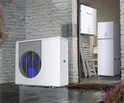
1. Outdoor Unit
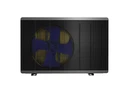
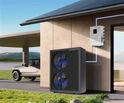
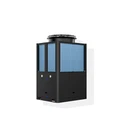
Often resembles a traditional air conditioner outdoor condenser
Typically a rectangular box with a fan and grille
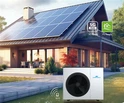
Usually installed on the ground or mounted on an exterior wall
Common colors: white, silver, grey
2. Indoor Unit
Depending on the system type, the indoor unit might look like:
A wall-mounted unit similar to an air conditioner
A floor-standing cabinet
A sleek ducted vent built into your ceiling or wall
A hydronic tank for hot water systems
In general, heat pumps are designed to blend into modern buildings while delivering high efficiency.
Air to Air Source Heat Pumps Explained
One of the most common types on the market today is the air to air source heat pump. As the name suggests, these systems:
Extract heat from the outdoor air
Transfer it indoors to warm your home
Or operate in reverse to cool your home
How Air Source Heat Pumps Work
Air-to-air systems move heat between outdoor air and indoor air, without heating water. This makes them ideal for:
Homes without existing water heating systems
Apartments and small houses
Regions with mild to moderate climates
Advantages
Easy installation compared to ground-source systems
Lower upfront cost
Energy efficient
Works for both heating and cooling
Limitations
Efficiency may decrease in extremely cold climates
Requires proper sizing and placement for best performance
Compared to ground-source heat pumps, air-to-air units are simpler, faster to install, and widely used in residential applications.

A heat pump absorbs heat from the environment-air, ground, or water-and transfers it to where you need it. This simple yet powerful process allows the system to deliver exceptional efficiency, lower energy bills, and year-round comfort.
Understanding what's a heat pump, what do heat pumps look like, and the basics of air to air source heat pumps helps make it clear why these systems are becoming a leading choice worldwide.
If you're exploring clean, efficient heating and cooling solutions, a heat pump is one of the smartest technologies available today.
If you'd like to know more about advanced heat pump systems or explore OEM/ODM options, PowerWorld is here to help.