

In the HVAC industry, the compressor is the primary determinant of a system's efficiency, thermal output, and operational lifespan. For engineers and system designers, selecting the right compressor hvac technology is a strategic decision that balances thermodynamic requirements with long-term reliability.
As global energy efficiency standards (such as SEER2 and SCOP) evolve, understanding the nuances of different types of compressors is essential for optimizing heat pump performance, especially in challenging climates. This guide provides a professional breakdown of the leading hvac compressor types driving modern heat pump technology.
The Critical Role of Compression in the Heat Pump Cycle
The compressor's function is to elevate the pressure and temperature of refrigerant vapor, facilitating the heat exchange process. Within a heat pump, the compressor accounts for the vast majority of energy consumption. Therefore, the efficiency of the compression process directly correlates to the unit's Coefficient of Performance (COP).
For modern thermal management, the goal is to achieve maximum volumetric efficiency with minimal mechanical friction and vibration.
5 Essential HVAC Compressor Types: A Comparative Analysis
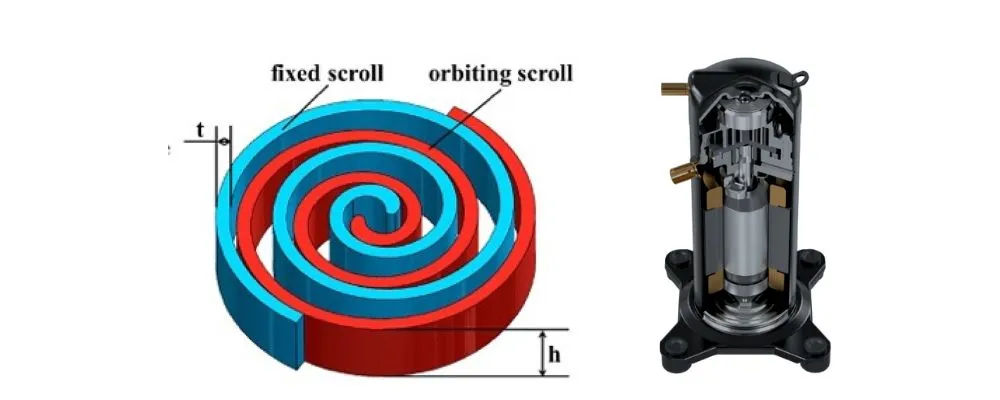
1. Scroll Compressors: The Benchmark for Precision
Scroll compressors utilize two interleaved spirals-one fixed and one orbiting-to compress refrigerant continuously.
Mechanical Profile: Zero reciprocating motion results in exceptionally low vibration.
Application: Dominant in premium residential and light commercial air-to-water heat pumps.
Key Advantage: With fewer moving parts and no valves to fail, scroll technology offers superior durability and high tolerance for liquid slugging, ensuring a lower failure rate over a 15-year lifecycle.

2. Rotary Compressors: Optimized for Variable Loads
Rotary compressors employ a rotating vane within a cylinder to decrease the volume of the gas.
Mechanical Profile: Compact, lightweight, and highly responsive.
Application: Frequently utilized in split systems and high-efficiency inverter heat pumps.
Key Advantage: When paired with DC Inverter technology, rotary compressors excel in part-load efficiency. They are the ideal choice for systems that require precise temperature modulation and small-to-medium capacities.

3. Screw Compressors: High-Capacity Stability
Screw compressors use twin helical rotors that mesh together to compress the refrigerant.
Mechanical Profile: Robust and capable of continuous, heavy-duty operation.
Application: Large-scale commercial chillers and industrial heat pump systems.
Key Advantage: They offer infinite or stepped capacity control, allowing for exact load matching in large facilities where energy waste must be minimized at all scales.

4. Reciprocating Compressors: The Legacy Choice
Utilizing a piston-and-cylinder mechanism similar to an internal combustion engine.
Mechanical Profile: High pressure capability but higher friction.
Key Advantage: While largely superseded by scroll units in residential sectors due to noise, they remain relevant for specialized high-pressure refrigeration applications where field serviceability of individual components is a priority.
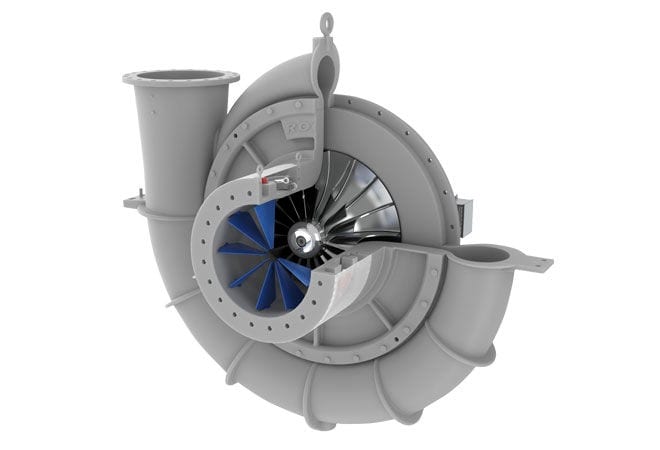
5. Centrifugal Compressors: Large-Scale Dynamics
These use kinetic energy from a high-speed impeller to compress refrigerant.
Application: Centralized district heating and massive industrial plants.
Key Advantage: Modern oil-free magnetic bearing centrifugal compressors offer the highest possible efficiency for ultra-large loads, significantly reducing the carbon footprint of massive infrastructure projects.
What are the most efficient HVAC compressor types for heat pumps?
The most efficient hvac compressor types for modern heat pumps are Scroll and Rotary compressors, specifically when integrated with DC Inverter technology. Scroll compressors provide the best balance of longevity and quiet operation for residential use, while Rotary compressors are highly efficient for variable-speed, compact units. For industrial-scale applications, Screw compressors deliver the highest reliability under constant, high-capacity loads.
Advanced Performance: EVI and Inverter Integration
The mechanical type of a compressor is only half the story. The integration of advanced control technologies is what separates industry-leading systems from standard ones.
DC Inverter Technology: Traditional compressors operate at fixed speeds, leading to inefficient "on-off" cycling. DC Inverters allow the compressor to modulate its frequency, reducing energy consumption by up to 30% and maintaining a stable indoor climate.
Enhanced Vapor Injection (EVI): For heat pumps operating in sub-zero environments, EVI technology is a critical addition to Scroll compressors. By injecting a portion of refrigerant vapor back into the compressor at an intermediate stage, EVI significantly boosts heating capacity and efficiency in ambient temperatures as low as -30°C.
Operational Lifespan and Maintenance Considerations
When evaluating the Total Cost of Ownership (TCO), the mechanical architecture of the compressor dictates the maintenance schedule:
Scroll/Rotary: Hermetically sealed with minimal internal friction; these units are typically maintenance-free throughout their operational life.
Screw: Require periodic oil analysis and bearing inspections but offer a long mechanical life (20+ years) in demanding industrial environments.

Conclusion: Engineering Excellence with Power World
Selecting the appropriate compressor hvac technology is the foundation of high-performance heat pump design. At Power World, we prioritize the integration of high-tier Scroll and Rotary compressors, enhanced with EVI and full DC Inverter capabilities. This ensures that every unit delivers maximum energy savings, quiet operation, and reliable performance in the world's most demanding climates.
For professionals seeking to optimize their thermal solutions, understanding these compressor technologies is the first step toward superior system design and client satisfaction.